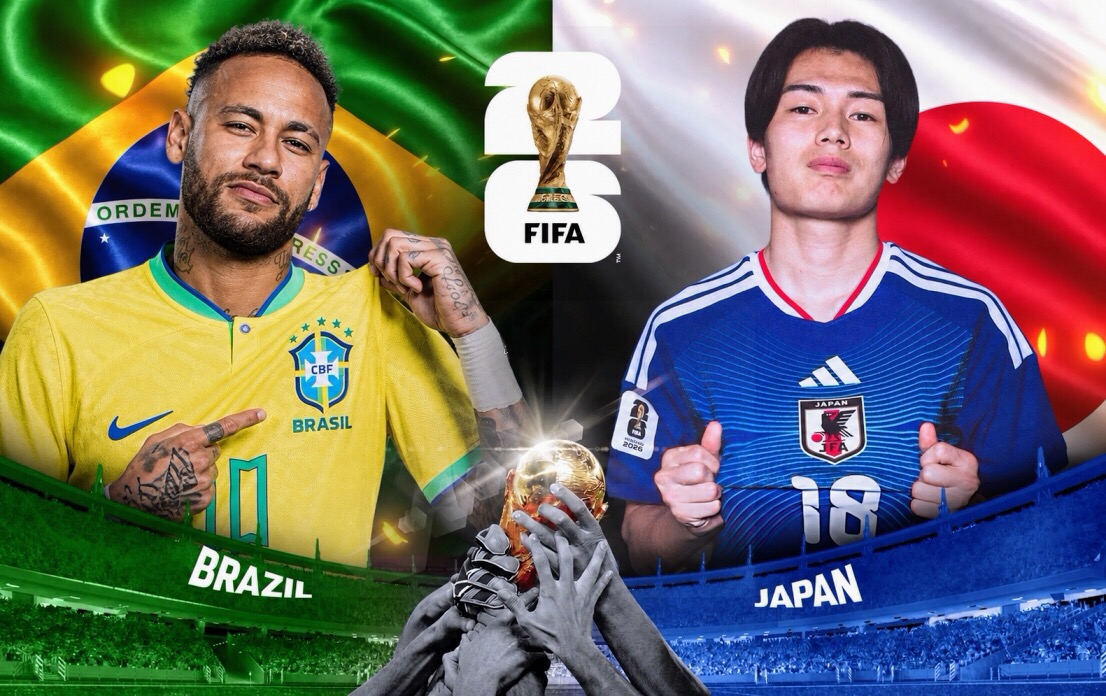
Brazil and Japan are set to meet in what promises to be one of the most exciting and technically fascinating encounters of the FIFA World Cup. The fixture brings together one of football's most decorated nations against one of Asia's fastest-rising powers, creating a contest that combines flair, discipline, speed, and tactical intelligence. Brazil enters the match as one of the favorites to lift the World Cup trophy, carrying an unmatched legacy of success, world-class talent, and an attacking philosophy that has thrilled football fans for generations. Japan, meanwhile, arrives with growing confidence after years of consistent progress on the international stage, having established themselves as one of Asia's strongest national teams through disciplined performances, technical excellence, and fearless displays against some of the world's biggest footballing nations. With both teams possessing distinct styles and enormous ambition, supporters can expect a captivating ninety minutes filled with intensity, skill, and memorable moments.
Brazil's approach is expected to revolve around controlling possession while constantly threatening the Japanese defense with fluid attacking movement and exceptional individual quality. Their midfield is likely to dictate the tempo of the game, moving the ball quickly across the pitch and creating opportunities through intelligent passing combinations. Brazil's attacking players possess outstanding dribbling ability, explosive pace, clinical finishing, and the creativity to unlock even the most organized defensive structures. Their full-backs are also expected to play an important role by providing width and overlapping runs, allowing Brazil to stretch Japan's defensive line and create space for attackers operating in central areas. The South American giants are known for combining technical brilliance with tactical flexibility, enabling them to adapt to different situations throughout the match without sacrificing their attacking identity.
Japan, however, has repeatedly demonstrated that they are more than capable of competing with football's elite nations. Their style is built upon relentless work rate, tactical discipline, quick passing, intelligent movement, and exceptional teamwork. Rather than relying on individual brilliance alone, Japan functions as a highly organized collective in which every player contributes defensively and offensively. They are likely to defend in a compact shape while pressing aggressively in carefully chosen moments to disrupt Brazil's rhythm. Once possession is won, Japan will aim to launch rapid counter-attacks through quick combinations, accurate passing, and the pace of their forward players. Their ability to transition smoothly from defense to attack has become one of their defining strengths, making them dangerous whenever Brazil commits numbers forward.
The midfield battle will almost certainly determine the flow of the contest. Brazil will attempt to dominate possession and patiently build attacks, while Japan's energetic midfielders will work tirelessly to close passing lanes, win second balls, and prevent Brazil from controlling the game's rhythm. Every interception, tackle, and recovery could shift momentum, particularly if Japan succeeds in frustrating Brazil during the opening stages. Brazil's technical superiority allows them to create opportunities even in crowded areas, but Japan's disciplined defensive organization and excellent positional awareness make them extremely difficult to break down. This contrast between Brazil's attacking creativity and Japan's tactical discipline should produce one of the tournament's most intriguing strategic battles.
Set pieces could also play an important role in deciding the outcome. Brazil possesses physically dominant players capable of scoring from corners and free kicks, while Japan's precise delivery and well-rehearsed routines can create dangerous opportunities despite facing taller opposition. Goalkeepers from both nations are expected to play vital roles, with crucial saves potentially influencing the direction of the match. Defensive concentration will be essential throughout, as even the smallest lapse against either side could result in a decisive goal.
As the match progresses into the latter stages, squad depth may become one of Brazil's greatest advantages. The ability to introduce fresh attacking talent from the bench allows them to maintain relentless pressure throughout the ninety minutes. Japan, meanwhile, will depend on their exceptional fitness, organization, and collective spirit to remain competitive until the final whistle. Tactical adjustments by both managers could significantly alter the game's rhythm, especially if the score remains close entering the final twenty minutes. Patience, composure, and efficient decision-making under pressure will be critical factors in determining which team gains the upper hand.
The atmosphere surrounding this fixture is expected to be spectacular, with passionate supporters from both nations creating an unforgettable World Cup occasion. Brazil's fans will bring their famous energy, music, and unwavering belief, while Japan's supporters are renowned for their passionate encouragement and remarkable sportsmanship. Every tackle, pass, save, and goal will carry enormous significance as both teams pursue qualification and ultimately dream of lifting football's most prestigious trophy. While Brazil enters the contest as the clear favorite due to its extraordinary history, attacking depth, and technical quality, Japan has consistently proven that discipline, organization, and fearless football can challenge even the strongest opponents. The unpredictable nature of the FIFA World Cup ensures that no result can ever be taken for granted, making this a fixture that promises excitement from the opening whistle to the final minute.
Match Prediction
Brazil 3–1 Japan
Brazil's exceptional attacking quality, creativity, and experience on the biggest stage make them the favorites heading into this contest. Japan's disciplined defensive structure and quick counter-attacking style should allow them to remain competitive and potentially find the back of the net, but Brazil's superior squad depth and clinical finishing are expected to secure an entertaining victory.
إرسال تعليق